

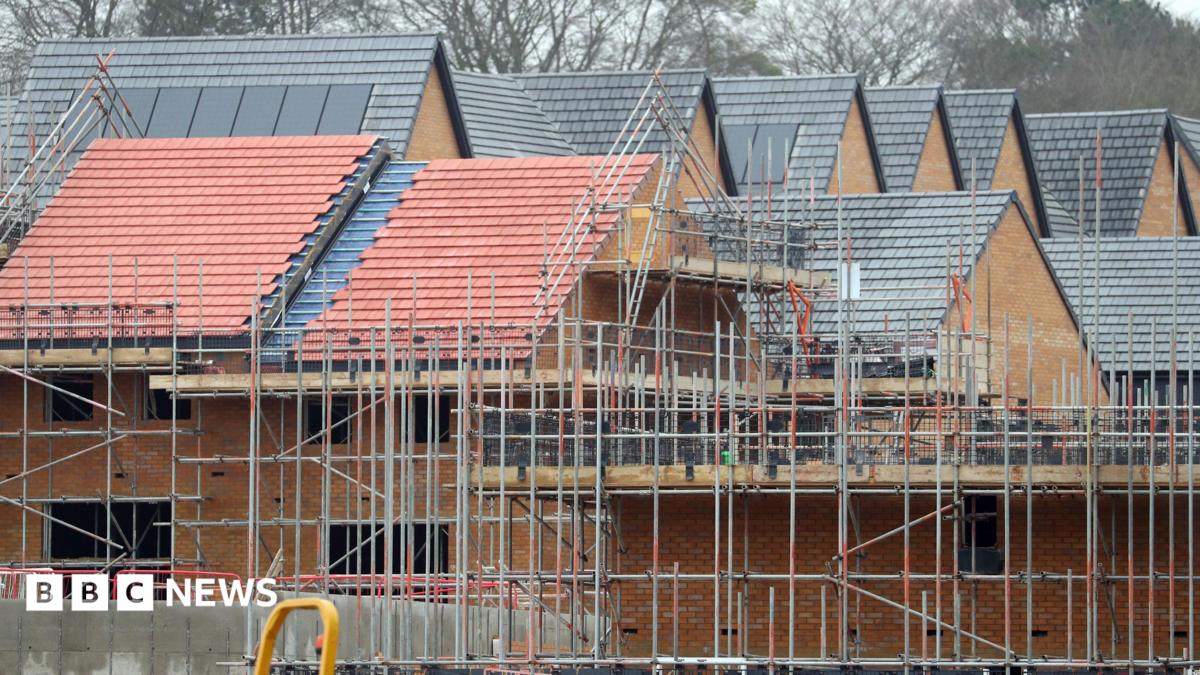
Mayors in 13 areas across England are to receive powers to review and potentially overrule local councils on major planning applications, under government plans intended to accelerate housebuilding and regeneration.
The new mayors planning powers will apply to proposals involving more than 150 homes, over 15,000 square metres of commercial space, or buildings higher than 30 metres. They will give regional leaders a role similar to that already held by London Mayor Sir Sadiq Khan, who can “call in” certain planning decisions for review.
The powers will cover combined authorities in Greater Manchester, Liverpool, the West of England, the West Midlands, North East England, South Yorkshire, West Yorkshire, York and North Yorkshire, Hull and East Yorkshire, Greater Lincolnshire, Cambridgeshire and Peterborough, the East Midlands, and Tees Valley.
Mayors planning powers linked to housing target
Housing minister Matthew Pennycook described the measure as an “essential part of the toolkit” needed by mayors to deliver new homes and regeneration. He said the government remained “absolutely determined” to meet its commitment to build 1.5 million homes in England by the end of the decade.
Pennycook acknowledged that the target was “really stretching”, but said a smaller ambition would not match the scale of the housing challenge. He pointed to nearly 180,000 children living in temporary accommodation as evidence of the need for increased housebuilding.
Housebuilders have warned that the target could be missed. Paul Bristow, the Conservative mayor of Cambridgeshire and Peterborough, said the government had “no chance whatsoever” of meeting it unless the planning system changed.
Bristow said that, if he already had the proposed powers, he would approve “tomorrow” two blocked schemes that he believed would provide homes for families and support economic growth. He said the aim was not to override local opinion, but to encourage developers and councils to reach compromises rather than reject projects outright.
He added that the perceived possibility of intervention could help bring the parties together. However, Bristow said his approach would be “much more light touch” than the system in London.
Local decision-making concerns
The Conservatives questioned whether councils should lose the ability to decide planning matters in their own communities. Sir James Cleverly, the shadow housing secretary, accused the government of weakening local control while making it easier to build traveller sites against local wishes. He also argued that Labour mayors had not met housing targets.
Gideon Amos, the Liberal Democrat housing and planning spokesperson, said removing powers from councils and councillors also removed powers from local people. He called instead for local authorities to receive the resources needed to build genuinely affordable homes and the infrastructure to support them.
Mothin Ali, deputy leader of the Greens, described the proposal as further tinkering while local authorities were being forced to operate with austerity budgets. Reform UK called the policy “centralisation in disguise”, arguing that Westminster should give devolved authorities more resources and decision-making powers.
The government has stressed that councils will continue to decide most planning applications and that every decision will remain subject to planning rules. A consultation setting out how the new system will operate is due to be published next week.
Mayors will also be able to grant “up-front permission”, which ministers say could allow construction to start without a developer submitting a further application. They are expected to have a greater say over housing funding, with Homes England directed to focus more closely on local mayors’ priorities.
Wider devolution plans
Andy Burnham, who served as mayor of Greater Manchester for nearly a decade, has repeatedly called for greater powers for elected mayors. He said challenges to local decision-making could work in both directions, arguing that local authorities could sometimes propose developments with unacceptable effects on communities.
Burnham has also promised to give all mayors a share of income tax revenue, saying he wanted to bring power home to every postcode. Earlier this week, he announced a programme sending high-performing civil servants to work temporarily in mayoral offices.
The wider approach has attracted criticism from some members of Burnham’s own party and from the Liberal Democrats, who have warned that it could create a two-tier system disadvantaging areas without an elected mayor.
In London, where the mayor can already review major developments, external housebuilding has fallen in recent years. Pennycook nevertheless said the existing call-in system had helped unblock strategic growth sites in the capital.
Source: BBC News


