

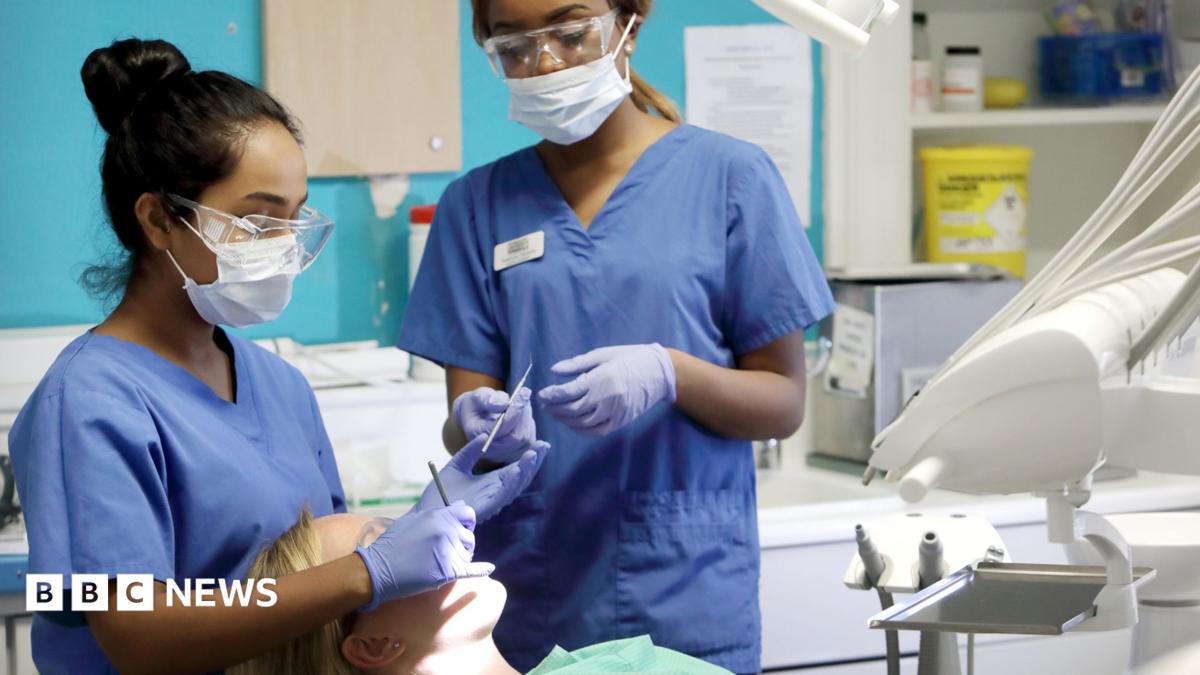
Access to NHS dentists is becoming increasingly dependent on where people live, with hundreds of practices in England withdrawing from NHS work over the past decade, new analysis suggests.
Research analysed by the Nuffield Trust found that nearly 600 practices have stopped offering NHS dentistry in the last 10 years. More than one in 10 practices that previously provided NHS care no longer do so, leaving some communities struggling to find appointments.
The decline has been particularly marked in parts of the South West and East of England. Cornwall, Devon and Northamptonshire recorded some of the largest reductions, with Cornwall losing more than a quarter of the practices that once offered NHS treatment.
NHS dentists increasingly difficult to find
Fewer than one in five dental practices in Somerset now offers NHS services. Alan, 83, who lives in the county, says he has stopped trying to find an NHS dentist because appointments near his home were effectively unavailable.
He has one tooth remaining after his others “crumbled out over the years”. He says he has had to change what he eats, although he jokes that he has developed a way of eating Brazil nuts.
The wider figures show that NHS dental activity is 8% below its pre-Covid level. Six in 10 adults have not seen an NHS dentist in the past two years, while only 38% of people who tried to secure a new appointment during that period were successful, according to a Nuffield Trust survey.
Vivak Shah, who runs three practices in Northamptonshire, still provides NHS treatment but says it operates at a loss. His practices no longer accept new NHS patients.
“Each year we struggle to decide what to do,” Shah said, adding that there was a limit to how much private work could cover losses from NHS dentistry. He warned that patients could be left in pain or forced to seek help elsewhere in the health service, including hospital accident and emergency departments, if more practices withdraw.
Jim Sykes, a dentist in Hexham, handed back his NHS contract in 2024. He said the decision was emotionally difficult, but the NHS work was running at such a loss that he had to consider his staff and the viability of the practice.
Sykes said he had asked whether he could continue treating children only, but was told he would also have to accept adults or give up the NHS work. He said he remained nervous about signing a new NHS contract, even if the government made another offer.
He also said none of his friends from his dentistry graduating class still worked in the NHS. They had moved into private dentistry, retired or gone into teaching, he said.
Contract concerns and regional inequality
Mark Dayan, head of public affairs at the Nuffield Trust, said the repeated return of NHS contracts over a decade represented a “quiet transformation” towards a two-tier dental service. He said access increasingly depended on what people could afford and where they lived.
Overall dentist practice numbers have risen in England during the decade. However, Dayan said the issue was not a shortage of dentistry as a whole, but a shortage of NHS dentistry. He argued that practices would need incentives to return to NHS work in areas where provision had thinned most.
Every region of England except North East London saw a fall in the number of practices offering NHS treatment. North East London recorded an increase of one practice compared with a decade ago. The smallest reductions were recorded in North West London, the Black Country and North East London.
The number of practices does not provide a complete measure of NHS capacity because practices vary in size. Other measures, including the amount of treatment delivered, also show a decline, although not as steep as the fall in practice numbers.
Shiv Pabary, chair of the British Dental Association’s General Dental Practice Committee, said the situation was the result of decisions made by successive governments. He called for NHS dentistry to be properly funded, warning that more dentists could reduce their NHS work or leave the service altogether.
The government says it is changing the dental contract and training more dentists in areas with the greatest need. It also plans to require newly qualified dentists to work in the NHS for a minimum of at least three years.
Campaign group 38 Degrees described the situation as shameful, saying people were being forced either to pay money they could not afford or to live with pain and the risk of further complications.
The findings suggest that the number of NHS dentists and the availability of NHS appointments remain uneven across England, despite the overall growth in dental practice numbers.
Source: BBC News